Bacon-Wrapped Filet Mignon with Creamed Spinach
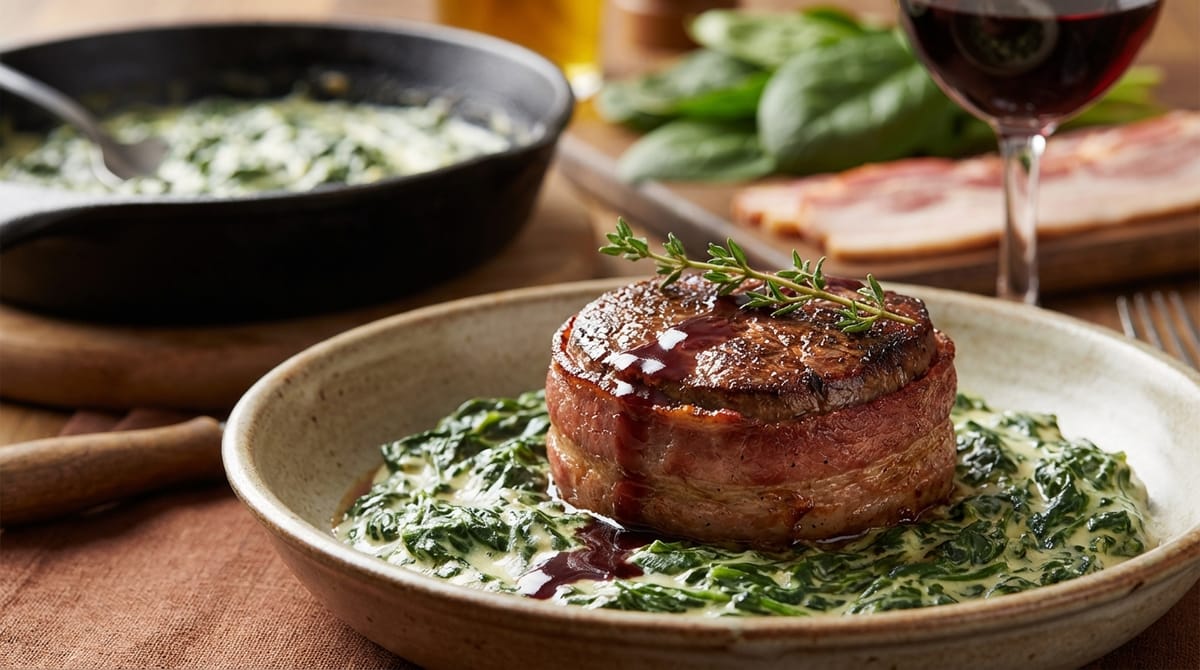
Filet mignon wrapped in bacon and served alongside velvety creamed spinach represents the pinnacle of steakhouse dining. This combination delivers tender, buttery beef enhanced by smoky bacon, complemented perfectly by rich, creamy spinach that balances the dish's robust flavors. While this meal might seem reserved for special occasions at high-end restaurants, mastering these techniques at home transforms any dinner into an impressive culinary experience.
The beauty of this dish lies in its elegant simplicity. Filet mignon, cut from the beef tenderloin, is naturally the most tender cut of beef available, though it lacks the intense beefy flavor of fattier cuts like ribeye. Wrapping it in bacon solves this beautifully - the bacon bastes the lean meat as it cooks, infusing it with smoky richness while adding a satisfying textural contrast. The creamed spinach serves as more than just a side dish; its luxurious texture and subtle flavors provide the perfect counterpoint to the meat's intensity.
This guide walks through every step of preparing both components, from selecting quality ingredients to achieving that perfect medium-rare center with a crispy bacon exterior. Whether you're planning a romantic dinner or looking to elevate your cooking repertoire, this classic pairing delivers restaurant-quality results with straightforward techniques anyone can master.
Recipe: Bacon-Wrapped Filet Mignon with Creamed Spinach
For the Filet Mignon:
- 4 filet mignon steaks (6-8 ounces each, about 1.5 inches thick)
- 4 strips thin-cut bacon
- 2 tablespoons olive oil
- 2 teaspoons kosher salt
- 1 teaspoon freshly ground black pepper
- 1 teaspoon garlic powder
- 2 tablespoons butter
For the Creamed Spinach:
- 1 pound fresh spinach (or 16 ounces frozen chopped spinach, thawed and drained)
- 3 tablespoons butter
- 3 cloves garlic, minced
- 3 tablespoons all-purpose flour
- 1.5 cups heavy cream
- 1/2 cup whole milk
- 1/2 cup grated Parmesan cheese
- 1/4 teaspoon nutmeg
- Salt and pepper to taste
- Optional: 1/4 cup crumbled Gorgonzola or blue cheese
Instructions:
- Remove steaks from refrigeration 30-45 minutes before cooking to bring them to room temperature. This ensures even cooking throughout.
- Pat the filet mignon steaks completely dry with paper towels. Season generously on all sides with salt, pepper, and garlic powder.
- Wrap each steak with one strip of bacon, securing it with a toothpick. The bacon should wrap around the circumference of the steak snugly but not too tightly.
- Preheat your oven to 400°F. Heat a large oven-safe skillet (preferably cast iron) over medium-high heat with olive oil.
- Sear the bacon-wrapped steaks for 2-3 minutes per side, including standing them on their edges to crisp the bacon all around. The bacon should begin to render and brown.
- Add butter to the pan and transfer the entire skillet to the preheated oven. Cook for 6-8 minutes for medium-rare (internal temperature of 130-135°F), or 8-10 minutes for medium (140-145°F).
- Remove from oven and let steaks rest for 5-10 minutes before serving. This allows juices to redistribute throughout the meat.
- For the creamed spinach: If using fresh spinach, blanch it in boiling salted water for 2 minutes, then drain and squeeze out excess moisture. Chop roughly.
- In a large saucepan, melt butter over medium heat. Add minced garlic and sauté for 1 minute until fragrant.
- Sprinkle flour over the butter and garlic, whisking constantly for 2 minutes to create a roux.
- Gradually add heavy cream and milk, whisking continuously to prevent lumps. Cook for 3-4 minutes until the mixture thickens.
- Stir in Parmesan cheese, nutmeg, salt, and pepper. Add the spinach and cook for another 2-3 minutes, stirring to combine. If using Gorgonzola or blue cheese, fold it in at this stage.
- Serve the bacon-wrapped filet mignon atop or alongside a generous portion of creamed spinach.
Selecting the Perfect Filet Mignon
Quality starts at the butcher counter. Look for filet mignon steaks that are uniformly thick - ideally between 1.5 and 2 inches - with a bright red color and minimal visible moisture on the surface. The meat should feel firm to the touch, not soft or mushy. While filet mignon is naturally lean, you may notice a small amount of marbling; more marbling generally indicates better flavor, though this cut will never match the marbling of a ribeye or strip steak.
Consider purchasing USDA Choice or Prime grade beef for the best results. Prime grade offers superior marbling and tenderness, while Choice grade provides excellent quality at a more accessible price point. If possible, ask your butcher to cut steaks from the center of the tenderloin, which offers the most consistent thickness and shape. Avoid pre-wrapped steaks that appear brown or have excessive liquid in the packaging, as these indicate age or improper storage.
The size matters for cooking consistency. Six to eight-ounce steaks work perfectly for this preparation, providing an elegant portion without overwhelming the plate. Steaks that are too thin (under 1 inch) will overcook easily when using the sear-and-oven method, while excessively thick cuts require longer cooking times that can dry out the exterior before the center reaches the desired temperature.
Choosing and Preparing the Bacon
Thin-cut bacon is essential for this dish. Regular or thick-cut bacon won't render properly in the time it takes to cook the steak, leaving you with chewy, undercooked bacon wrapped around perfectly cooked beef. Thin-cut bacon crisps beautifully while the steak reaches medium-rare, creating that ideal textural contrast.
Standard bacon works well, but consider upgrading to double-smoked bacon for an intensified smoky flavor that permeates the entire dish. The additional smoking process adds depth without overwhelming the delicate beef flavor. Avoid heavily peppered or maple-flavored bacon varieties, as these competing flavors can clash with your seasoning and the creamed spinach.
When wrapping the steaks, stretch the bacon slightly as you wind it around the circumference. This ensures the bacon stays taut during cooking and doesn't unravel. Secure with a single toothpick inserted horizontally through the bacon and steak. Some cooks prefer to partially cook the bacon before wrapping - about 2-3 minutes in a skillet - which guarantees crispness, though this extra step isn't necessary if you're using thin-cut bacon and the proper cooking method.
Mastering the Cooking Technique
The sear-and-oven method delivers consistent results superior to stovetop-only cooking. Starting with a high-heat sear creates a flavorful crust through the Maillard reaction - the chemical process that browns proteins and creates complex flavors. This initial searing should be brief but intense, just 2-3 minutes per side in a smoking-hot skillet.
Cast iron skillets are ideal because they retain heat exceptionally well and can move seamlessly from stovetop to oven. If you don't have cast iron, any heavy-bottomed, oven-safe skillet works. Avoid nonstick pans, as they can't withstand the high temperatures needed for a proper sear and may release harmful fumes when overheated.
Temperature monitoring is critical. Invest in an instant-read meat thermometer and check the internal temperature after the initial oven time. Remember that carryover cooking will increase the temperature by 5-10 degrees during the resting period, so remove steaks from the oven when they're 5 degrees below your target temperature. For medium-rare, pull them at 125-130°F; for medium, remove at 135-140°F. Anything beyond medium defeats the purpose of cooking filet mignon, as the tenderness advantage disappears with overcooking.
Don't skip the resting period. Those 5-10 minutes allow the meat's proteins to relax and reabsorb juices that were driven to the center during cooking. Cutting into a steak immediately after cooking causes these juices to flood out onto the cutting board, leaving you with drier meat.
Creating Restaurant-Quality Creamed Spinach
Fresh spinach delivers superior flavor and texture compared to frozen, though frozen works in a pinch for convenience. Fresh baby spinach is particularly tender and requires minimal preparation - just a quick blanch to wilt it down. One pound of fresh spinach seems like an enormous amount, but it reduces dramatically when cooked, yielding about the same volume as a 10-ounce package of frozen spinach.
The key to creamed spinach is the roux - that mixture of butter and flour cooked together before adding liquid. This technique prevents the cream sauce from being thin or grainy. Cook the roux for at least two minutes, whisking constantly, until it smells slightly nutty. This cooking time removes the raw flour taste that would otherwise persist in the finished dish.
Adding cheese elevates creamed spinach from good to exceptional. Parmesan provides a sharp, salty backbone that enhances rather than overwhelms. For a more luxurious version, fold in crumbled Gorgonzola or blue cheese at the end. The tangy, pungent notes of these cheeses create an incredible flavor bridge between the rich cream and the savory beef. Start with a small amount - blue cheese is potent - and adjust to your preference.
Nutmeg is the secret ingredient many home cooks overlook. Just a small amount (1/4 teaspoon or less) adds warmth and complexity without making the dish taste overtly spiced. Freshly grated nutmeg offers more vibrant flavor than pre-ground, but either works. This subtle addition is what separates homemade creamed spinach from the cafeteria-style version.
Wine Pairing and Serving Suggestions
Bacon-wrapped filet mignon demands a bold red wine that can stand up to the rich, smoky flavors without overwhelming the beef's subtle taste. Cabernet Sauvignon is the classic choice - its full body, firm tannins, and dark fruit flavors complement the meat beautifully while cutting through the richness of both the bacon and creamed spinach. Look for bottles from Napa Valley, Bordeaux, or Washington State for reliable quality.
Merlot offers a softer alternative with plush texture and notes of plum and chocolate that harmonize with the bacon's smokiness. For something more adventurous, consider a Malbec from Argentina, which brings bold fruit flavors and a velvety texture that pairs excellently with beef. If you prefer earthy, complex wines, a mature Pinot Noir from Burgundy or Oregon provides enough structure to complement the steak while its lighter body won't overpower the dish's nuanced flavors.
Beyond wine, complete the steakhouse experience with complementary sides. Roasted asparagus with lemon provides a bright, crisp contrast to the rich main components. Hasselback potatoes - thinly sliced potatoes roasted until crispy - add textural variety and absorb the steak's juices beautifully. A simple arugula salad with shaved Parmesan and lemon vinaigrette offers a refreshing palate cleanser between bites.
Common Mistakes to Avoid
Overcrowding the pan ranks as the most frequent error. If your skillet isn't large enough to accommodate all four steaks with at least an inch of space between them, cook in batches. Crowding drops the pan temperature, causing steaks to steam rather than sear, which prevents that flavorful crust from developing properly.
Using bacon straight from the refrigerator makes wrapping difficult and can lead to uneven cooking. Let bacon sit at room temperature for 10-15 minutes before wrapping - it becomes more pliable and adheres better to the steak. Similarly, cold steaks won't cook evenly; the exterior overcooks before the center comes to temperature. Always allow at least 30 minutes for the meat to lose its refrigerator chill.
Overseasoning is tempting but unnecessary. Filet mignon has a delicate flavor that's easily masked by aggressive seasoning. Salt, pepper, and perhaps garlic powder are sufficient - the bacon provides plenty of additional flavor. Save complex spice rubs for more robust cuts like ribeye or sirloin that can handle bold seasonings.
For the creamed spinach, the biggest mistake is not removing enough moisture from the spinach before adding it to the cream sauce. Whether using fresh or frozen, squeeze the cooked spinach firmly in a clean kitchen towel or cheesecloth to extract as much liquid as possible. Excess water dilutes the cream sauce, creating a thin, watery consistency instead of the thick, luxurious texture you're aiming for.
Conclusion
Bacon-wrapped filet mignon with creamed spinach represents the best of steakhouse cuisine - impressive presentation, luxurious flavors, and surprising simplicity in execution. By selecting quality ingredients, particularly properly-sized filet mignon and thin-cut bacon, you've already completed half the work. The sear-and-oven cooking method ensures consistent results, delivering that perfect pink center with a beautifully caramelized exterior and crispy bacon wrapper.
The creamed spinach transforms this from a simple steak dinner into a complete steakhouse experience. Its rich, velvety texture and subtle flavors provide the ideal complement to the meat's intensity, while the optional addition of Gorgonzola or blue cheese adds sophisticated depth. Remember the key principles: bring ingredients to room temperature, don't skip the resting period, and use a meat thermometer for precision. These techniques apply beyond this specific dish, improving your overall cooking skills.
With practice, this dish becomes a reliable centerpiece for special occasions, romantic dinners, or any time you want to create something truly memorable. The combination of tender beef, smoky bacon, and luxurious creamed spinach never fails to impress, proving that restaurant-quality results are entirely achievable in your home kitchen.
Sources
- Weber Grills - Filet Mignon with Gorgonzola Creamed Spinach
- Girl Carnivore - Bacon-Wrapped Filet Mignon Guide
- Kevin Is Cooking - Bacon-Wrapped Filet Mignon Recipe
- Atkins - Bacon-Wrapped Filet with Blue Cheese Butter Sauce
- Food Network - Bacon-Wrapped Beef Tenderloin with Spinach
- Closet Cooking - Double-Smoked Bacon-Wrapped Fillet