Chicago-Style Italian Beef with Giardiniera
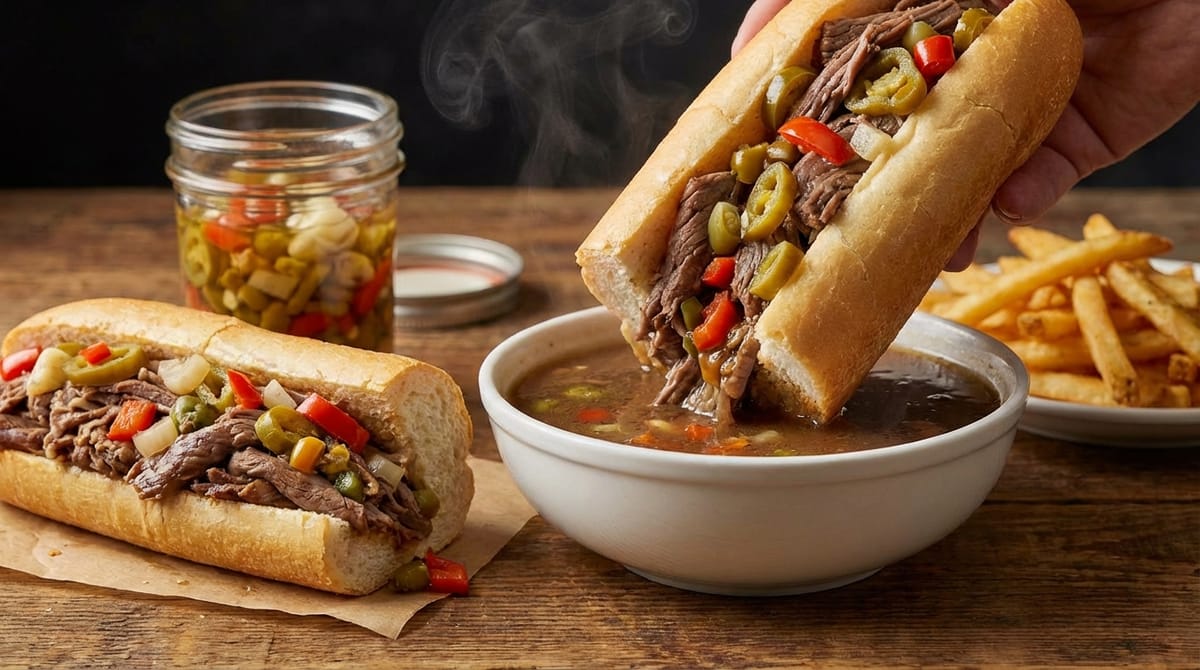
Chicago's Italian beef sandwich stands as one of America's most iconic regional foods, a messy, magnificent creation that demands to be eaten over a sink or with a stack of napkins at the ready. This sandwich isn't just meat on bread - it's a carefully orchestrated combination of thinly sliced, seasoned beef swimming in aromatic gravy, piled onto a sturdy roll that somehow manages to hold everything together despite being thoroughly soaked in jus. The finishing touches of tangy giardiniera and sweet peppers transform this already impressive sandwich into something truly transcendent.
The beauty of Italian beef lies in its deceptive simplicity. At its core, you're working with just a few components: well-seasoned roast beef, a fragrant broth infused with Italian herbs and spices, crusty bread that can withstand a serious dipping, and those essential toppings. Yet the elegance happens in the details - the paper-thin slicing of the beef, the precise balance of seasonings in the jus, and the proper assembly technique that ensures every bite delivers the perfect ratio of meat, gravy, and toppings.
Making authentic Chicago-style Italian beef at home requires patience and attention to technique, but the results rival anything you'd find at the city's legendary sandwich shops. This guide walks you through every step of the process, from seasoning and roasting the beef to preparing traditional giardiniera and assembling sandwiches that capture the true spirit of this Chicago classic.
The Complete Italian Beef Recipe
Creating authentic Italian beef starts with selecting the right cut and building layers of flavor through proper seasoning and cooking technique. The following recipe produces enough for 8-10 generous sandwiches, perfect for feeding a crowd or meal prepping for the week ahead.
Ingredients for the Beef and Jus
- 3-4 pound beef top round roast or eye of round roast
- 2 tablespoons coarse kosher salt
- 1 tablespoon fresh ground black pepper
- 2 tablespoons dried oregano
- 1 tablespoon dried basil
- 2 teaspoons fennel seeds, lightly crushed
- 2 teaspoons paprika
- 1 teaspoon coriander seeds, crushed
- 1 teaspoon crushed red pepper flakes
- 1 tablespoon granulated garlic
- 6-8 cups low-sodium beef broth
- 6 garlic cloves, smashed
- 1 small yellow onion, quartered
- 1 green bell pepper, roughly chopped
- Fresh parsley (optional garnish)
For the Sweet Peppers
- 3-4 green bell peppers, sliced into strips
- 2 tablespoons olive oil
- 1/2 teaspoon salt
- 1/4 teaspoon black pepper
- 1/2 teaspoon dried oregano
For Serving
- 8-10 Italian rolls or French bread rolls
- Prepared giardiniera (store-bought or homemade)
Preparation Steps
- Create the spice rub by combining salt, black pepper, oregano, basil, fennel seeds, paprika, coriander seeds, red pepper flakes, and granulated garlic in a small bowl. Mix thoroughly to distribute all seasonings evenly.
- Pat the beef roast completely dry with paper towels. Apply the spice rub generously to all sides of the roast, pressing it into the meat to ensure good adhesion. Let the seasoned roast sit at room temperature for 30-45 minutes before cooking.
- Preheat your oven to 400 degrees F. Place the seasoned roast on a rack in a roasting pan and cook for 15 minutes to develop a flavorful crust on the exterior.
- Reduce the oven temperature to 250 degrees F and continue roasting until the internal temperature reaches 125-130 degrees F for medium-rare, approximately 60-90 minutes depending on the size of your roast. Use a meat thermometer to monitor the temperature accurately.
- Remove the roast from the oven and let it rest for 20-30 minutes. This resting period allows the juices to redistribute throughout the meat, ensuring maximum tenderness.
- While the beef rests, prepare the jus. In a large pot, combine beef broth, smashed garlic cloves, quartered onion, and chopped bell pepper. Bring to a simmer and let the flavors meld for 15-20 minutes. Strain out the solids, returning the clear, aromatic broth to the pot.
- Once the beef has rested and cooled slightly, slice it as thinly as possible against the grain. A sharp slicing knife or electric meat slicer produces the best results. The thinner you can slice, the more tender and authentic your sandwiches will be.
- Add the sliced beef to the simmering jus. Keep the heat low - you want to gently warm the beef through without cooking it further. The beef can hold in the jus for several hours on low heat, making this an excellent make-ahead option.
- For the sweet peppers, heat olive oil in a skillet over medium heat. Add sliced bell peppers, salt, pepper, and oregano. Cook, stirring occasionally, until the peppers are soft and slightly caramelized, about 15-20 minutes.
- To assemble, toast the rolls until the exterior is crispy but the interior remains soft. Using tongs, pull beef from the jus, letting excess liquid drip back into the pot. Pile the beef generously onto the roll, then ladle additional jus over the meat. Top with sweet peppers and giardiniera according to preference.
Understanding Traditional Giardiniera
Giardiniera represents the soul of Chicago-style Italian beef, providing a sharp, spicy contrast to the rich, savory beef and jus. This pickled vegetable mixture typically contains cauliflower, carrots, celery, peppers, and various seasonings, all preserved in either an oil-based or vinegar-based brine. The vegetables maintain a satisfying crunch even after pickling, adding textural complexity to every bite of your sandwich.
Traditional Chicago giardiniera leans toward the spicy side, incorporating serrano peppers or sport peppers for heat. The fermentation or pickling process develops complex tangy flavors that cut through the richness of the beef, while the oil coating helps the vegetables cling to the meat rather than sliding off the sandwich. Some versions use a lacto-fermentation method, which creates a deeper, more complex flavor profile through natural bacterial fermentation rather than simple vinegar pickling.
For a homemade version, dice equal parts celery, carrot, and onion into small, uniform pieces. Add sliced peppers of your choice - jalapeños for moderate heat or serranos for more intensity. Pack the vegetables into clean jars with garlic, oregano, and red pepper flakes, then cover with a brine made from water, vinegar, and salt. Let the mixture ferment at room temperature for 3-5 days before refrigerating, or for a quicker version, simply refrigerate immediately and allow the flavors to develop over a week.
The Art of Proper Beef Slicing
Achieving restaurant-quality Italian beef at home hinges largely on your ability to slice the beef properly. The difference between thick, chewy slices and delicate, melt-in-your-mouth ribbons of beef determines whether your sandwich tastes homemade or professional. Chicago's legendary beef stands use commercial meat slicers that can shave beef paper-thin, but home cooks can approximate these results with the right technique and tools.
The key is working with cold beef. After the initial rest period, wrap your roast tightly and refrigerate it for at least 2 hours, or preferably overnight. Cold meat firms up, making it significantly easier to achieve thin, even slices. If you're slicing by hand, use the longest, sharpest knife in your kitchen - a long slicing knife or carving knife works best. Position the blade at a slight angle and use long, smooth strokes rather than a sawing motion.
Always slice against the grain of the meat. Look closely at the roast to identify which direction the muscle fibers run, then cut perpendicular to those fibers. This technique shortens the muscle fibers in each slice, resulting in more tender meat. Aim for slices no thicker than 1/8 inch; thinner is even better if you can manage it. If you find yourself making Italian beef regularly, investing in an inexpensive electric meat slicer pays dividends in both consistency and ease of preparation.
Mastering the Jus
The jus - that aromatic, flavorful broth that both cooks and serves the beef - separates exceptional Italian beef from merely good versions. This isn't a thick gravy or heavy sauce; rather, it's a clear, intensely flavored broth that should taste bold enough to stand on its own. The jus serves multiple purposes: it keeps the sliced beef moist and tender, adds another layer of seasoning to the meat, and soaks into the bread to create that signature messy, drippy sandwich experience.
Building a great jus starts with quality beef broth as your base. Low-sodium varieties work best because they allow you to control the salt level as the liquid reduces and concentrates. The aromatics - onions, garlic, and bell peppers - infuse the broth with sweetness and depth, while the Italian seasonings echo and amplify the spices rubbed onto the roast itself. Some cooks add a splash of the drippings from the roasting pan to enrich the jus further, though this step remains optional.
The jus should maintain a gentle simmer when you add the sliced beef. Boiling will toughen the meat and turn the broth cloudy, while too low a temperature won't adequately warm the beef. Keep a ladle handy during serving - that extra spoonful of jus drizzled over the assembled sandwich just before eating makes all the difference. Many Chicago beef stands ask customers how they want their sandwich: "dry" means minimal jus, "wet" means extra jus ladled over the top, and "dipped" means the entire assembled sandwich gets briefly dunked in the jus before serving.
Choosing and Preparing the Right Bread
Italian beef demands a specific type of roll - one sturdy enough to withstand a thorough soaking in jus without immediately disintegrating, yet soft enough inside to provide comfort rather than a chewy workout for your jaw. The ideal roll features a crispy, somewhat hard exterior crust with a light, airy interior crumb. Italian rolls or French bread rolls typically fit this description perfectly, though some Chicago establishments swear by specific local bakeries for their rolls.
The roll should measure 6-8 inches long and be wide enough to accommodate a generous pile of beef without the meat spilling out the sides. Before assembly, toast the rolls either in the oven or on a flat-top griddle. This toasting step serves two crucial purposes: it adds textural contrast and creates a slight barrier that helps the bread hold up longer against the onslaught of hot jus. Toast only the cut sides of the roll, leaving the exterior crust as is.
Some purists insist on leaving one end of the roll partially attached, creating a hinge that helps contain the filling. Others prefer completely separating the top from the bottom for easier loading of the beef. Either approach works, though the hinged method does help prevent the catastrophic sandwich failure that can occur when too much jus meets insufficiently toasted bread. When in doubt, err on the side of more toasting rather than less.
Assembly Techniques and Serving Styles
Assembling Italian beef follows a specific sequence that ensures optimal flavor distribution and structural integrity. Start with your toasted roll opened and ready. Using tongs, pull a generous portion of beef from the simmering jus, allowing excess liquid to drip back into the pot for a moment. Don't shake the beef too vigorously - you want it moist but not swimming. Pile the beef onto the bottom half of the roll, building a substantial mound that extends from end to end.
Next comes the decision point: sweet peppers, hot giardiniera, or both. Traditionalists often choose one or the other, while adventurous eaters embrace the combination. If using both, layer the sweet peppers first, then top with giardiniera. The oil from the giardiniera will help everything stick together. Now comes the crucial jus application - use a ladle to drizzle additional jus over the meat and toppings, letting it soak into the bread. The amount depends on personal preference, but don't be shy. This sandwich should be messy.
For the full Chicago experience, consider offering the "dipped" option. After assembling the sandwich completely, use tongs to grab the entire thing and quickly dunk it into the pot of jus, submerging it for just a second or two. This technique thoroughly saturates the bread and creates the ultimate messy, drippy sandwich that epitomizes Italian beef culture. Serve immediately with plenty of napkins, and embrace the fact that eating Italian beef is an inherently hands-on, clothes-threatening experience.
Make-Ahead Strategies and Storage
Italian beef's forgiving nature makes it exceptional for meal prep, entertaining, or simply having delicious sandwiches ready on demand throughout the week. The beef actually improves when allowed to sit in the jus for several hours or even overnight, as the meat continues absorbing flavor from the aromatic broth. After slicing the beef and preparing the jus, combine them in a large pot or storage container and refrigerate for up to 4 days.
When ready to serve, gently reheat the beef and jus together over low heat, stirring occasionally to ensure even warming. Never microwave the beef and jus together, as this can create hot spots that overcook portions of the meat, making it tough and dry. The stovetop reheating method maintains the proper texture and allows you to control the temperature precisely. The sweet peppers can be prepared up to 3 days in advance and reheated separately, while giardiniera keeps for weeks or even months when properly refrigerated.
For longer storage, Italian beef freezes remarkably well. Portion the sliced beef and jus into freezer-safe containers, leaving some headspace for expansion. Frozen Italian beef maintains quality for up to 3 months. Thaw overnight in the refrigerator before reheating. This make-ahead capability makes Italian beef perfect for parties - you can prepare everything days in advance, then simply reheat and assemble sandwiches as guests arrive.
Conclusion
Chicago-style Italian beef represents comfort food at its finest - humble ingredients elevated through careful technique and bold seasoning into something truly memorable. The combination of tender, thinly sliced beef swimming in aromatic jus, topped with spicy giardiniera and sweet peppers, all contained within a crusty roll, creates a sandwich experience unlike any other. While the preparation requires several steps and some patience, none of the individual techniques are particularly difficult, making this iconic sandwich accessible to home cooks willing to invest a few hours in the process.
The real secret to exceptional Italian beef lies not in exotic ingredients or complicated procedures, but in attention to detail: slicing the beef thin enough, seasoning boldly enough, keeping the jus at the right temperature, and assembling with enough confidence to create a properly messy, drippy sandwich. Once you've mastered these fundamentals, you'll find yourself returning to this recipe again and again, perhaps tweaking the spice blend or experimenting with different pepper combinations to make it your own. The beauty of Italian beef is that it welcomes personalization while maintaining its essential character - a sandwich that demands to be eaten with your hands, rewards boldness over timidity, and never apologizes for being deliciously, gloriously messy.