Country Breakfast Skillet with Potatoes, Bacon, Cheese
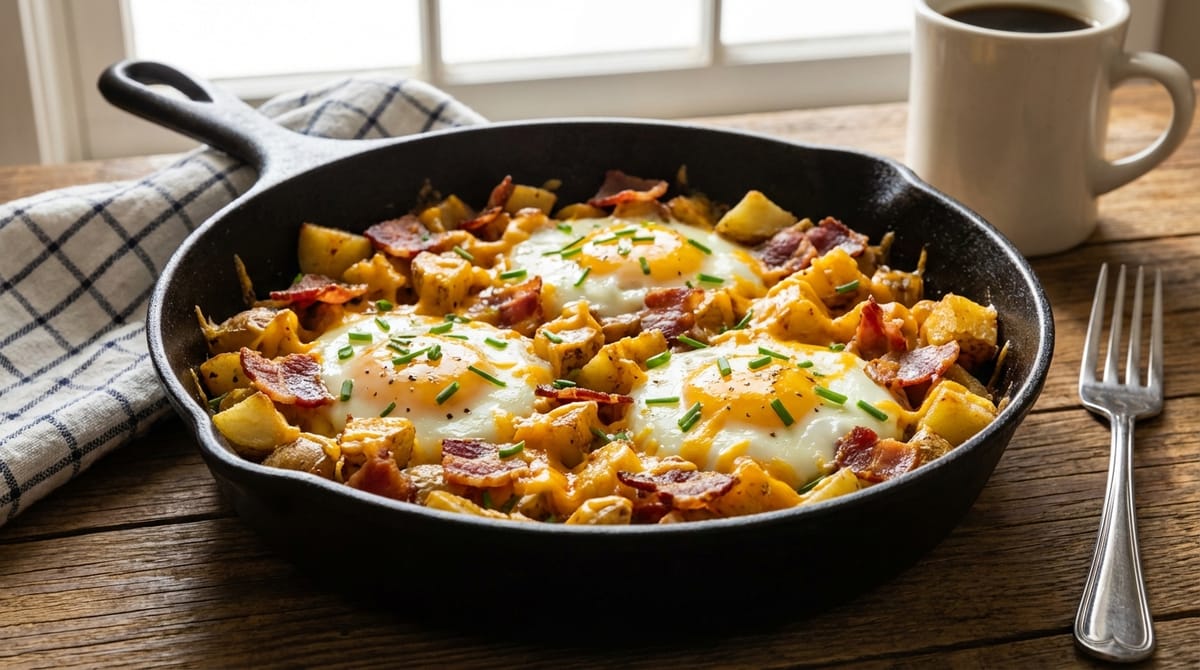
Few breakfast dishes deliver the same soul-satisfying combination of crispy, savory, and hearty flavors as a well-executed country breakfast skillet. This one-pan wonder transforms simple ingredients into a meal that fuels your morning and brings everyone to the table. The enchantment lies in the contrast of textures - crispy-edged potatoes, salty bacon pieces, caramelized onions, and gooey melted cheese all mingling together in a cast iron skillet.
What makes this dish particularly appealing is its versatility and forgiving nature. You can prepare it on a lazy Sunday morning, whip it up for a crowd during brunch, or even serve it as a comforting breakfast-for-dinner option. The cooking process fills your kitchen with an irresistible aroma that announces breakfast is ready long before you call everyone to eat. Whether you're cooking over a campfire or on your stovetop, this country breakfast skillet adapts to your setting while delivering consistent, delicious results.
Country Breakfast Skillet Recipe
This recipe serves 4-6 people and takes approximately 45 minutes from start to finish. The key to success is proper preparation and allowing each ingredient to develop its full flavor through proper browning and caramelization.
Ingredients
- 8-10 slices thick-cut bacon
- 4 cups diced russet or Yukon Gold potatoes (about 3-4 medium potatoes)
- 1 medium onion, diced
- 1 green bell pepper, diced
- 2 cloves garlic, minced
- 1 teaspoon fresh thyme (or 1/2 teaspoon dried)
- 1/2 teaspoon paprika
- Salt and black pepper to taste
- 1 1/2 cups shredded cheddar cheese (or a mix of cheddar and Monterey Jack)
- 4-6 eggs (optional, for topping)
- Fresh parsley for garnish
Instructions
- Cook the bacon in a large cast iron skillet or heavy-bottomed pan over medium heat until crispy, about 8-10 minutes. Remove bacon to a paper towel-lined plate, let cool, then crumble into bite-sized pieces. Set aside.
- Drain most of the bacon drippings, reserving about 2 tablespoons in the skillet. This bacon fat will add incredible flavor to your potatoes.
- Add the diced potatoes to the skillet in an even layer. Press them down gently with a spatula but resist the urge to stir constantly - this is crucial for achieving that golden, crispy exterior. Cook for 5-7 minutes without moving them.
- Flip the potatoes and cook for another 5-7 minutes until they develop a golden-brown crust on multiple sides. The total potato cooking time should be about 15-20 minutes.
- Add the diced onion and bell pepper to the skillet. Cook for 5-6 minutes, stirring occasionally, until the vegetables soften and the onions become translucent with lightly caramelized edges.
- Stir in the minced garlic, thyme, paprika, salt, and pepper. Cook for 1 minute until fragrant.
- Add the crumbled bacon back to the skillet and stir everything together to combine evenly.
- Sprinkle the shredded cheese over the top of the skillet mixture. You can either let it melt on the stovetop over low heat with a lid on, or place the skillet under the broiler for 2-3 minutes until the cheese is bubbly and golden.
- If adding eggs, create small wells in the mixture and crack an egg into each well. Cover and cook until the eggs reach your desired doneness, about 5-7 minutes for set whites with runny yolks.
- Garnish with fresh parsley and serve immediately with buttered toast or fresh fruit.
Choosing the Right Potatoes
The type of potato you select significantly impacts the final texture of your breakfast skillet. Russet potatoes are the traditional choice for their high starch content, which creates a fluffy interior and crispy exterior when cooked properly. Their neutral flavor also acts as the perfect canvas for absorbing the bacon drippings and seasonings.
Yukon Gold potatoes offer a creamier, more buttery texture with a naturally richer flavor. They hold their shape well during cooking and develop a beautiful golden crust. Some cooks prefer mixing both varieties for a combination of textures - the russets provide crispiness while the Yukon Golds add creaminess.
Regardless of which variety you choose, proper preparation is essential. Dice the potatoes into uniform pieces, approximately 1/2-inch cubes, to ensure even cooking. If you're using refrigerated hash browns as a time-saving alternative, make sure they're completely thawed and patted dry with paper towels. Excess moisture is the enemy of crispiness, preventing that coveted golden-brown crust from forming.
Bacon Selection and Cooking Techniques
Thick-cut bacon is the preferred choice for breakfast skillets because it provides a meatier texture and more substantial bacon flavor throughout the dish. The thicker slices also render more fat, which becomes the flavorful cooking medium for your potatoes. Applewood smoked bacon adds an extra layer of complexity with its sweet, smoky notes that complement the other ingredients beautifully.
When cooking the bacon, aim for a crispy texture rather than chewy. The bacon will be crumbled and distributed throughout the skillet, so you want pieces that maintain their structure and provide textural contrast. Cook it over medium heat to allow the fat to render slowly without burning. Once crispy, remove it promptly to prevent overcooking, as it will warm through again when added back to the finished skillet.
The reserved bacon drippings are liquid gold for this recipe. Those two tablespoons contain concentrated pork flavor that will infuse every potato cube and vegetable piece. If you prefer a lighter version or need to accommodate dietary restrictions, you can substitute olive oil or butter, though you'll sacrifice some of that signature country breakfast flavor.
Mastering the Crispy Potato Technique
Achieving perfectly crispy potatoes is the hallmark of an exceptional breakfast skillet, and it requires patience and proper technique. The most common mistake is overcrowding the pan or stirring too frequently. When potatoes are packed too tightly, they steam rather than brown, resulting in a mushy texture instead of the desired crispy exterior.
After adding the potatoes to the hot bacon drippings, spread them in an even layer and press them down gently with your spatula. Then leave them alone. This undisturbed cooking time allows the starches on the potato surface to caramelize and form a golden crust. After 5-7 minutes, flip them in sections and allow the other side to brown. This method creates multiple crispy surfaces on each potato piece.
Temperature control is equally important. Medium to medium-high heat provides enough energy to brown the potatoes without burning them. If your heat is too low, the potatoes will absorb too much oil and become greasy. Too high, and they'll burn on the outside while remaining raw inside. Listen for a gentle sizzle - that's the sound of proper browning in action.
Vegetable Additions and Flavor Variations
While onions and bell peppers form the classic vegetable base for a country breakfast skillet, this dish welcomes numerous variations based on personal preference and what's available in your kitchen. Mushrooms add an earthy, umami-rich dimension and pair exceptionally well with the bacon and cheese. Slice them thickly and add them along with the onions, giving them time to release their moisture and develop a golden-brown exterior.
For those who enjoy heat, diced jalapeños or poblano peppers introduce a spicy kick that cuts through the richness of the bacon and cheese. Add them with the other vegetables, or for a milder heat, remove the seeds and membranes before dicing. Crushed red pepper flakes sprinkled over the finished dish provide adjustable heat that each diner can control.
Fresh herbs elevate the dish from hearty to sophisticated. Thyme is traditional and pairs beautifully with potatoes and pork, but rosemary, parsley, or chives each bring their own character. Add woody herbs like thyme and rosemary during cooking to allow their flavors to infuse the dish. Delicate herbs like parsley and chives are best added as a fresh garnish just before serving to preserve their bright flavor and color.
Cheese Selection and Melting Methods
Sharp cheddar cheese is the go-to choice for breakfast skillets, providing a tangy, robust flavor that stands up to the bacon and complements the potatoes. Its excellent melting properties create those desirable cheese pulls when you scoop out servings. For a creamier, milder option, Monterey Jack melts beautifully and adds a smooth texture without overwhelming the other flavors. Many cooks use a combination of both, balancing sharpness with creaminess.
The method you choose for melting the cheese affects both texture and presentation. The stovetop method involves sprinkling cheese over the skillet, reducing heat to low, and covering with a lid. This gentle approach melts the cheese evenly without browning it, creating a smooth, creamy topping. The entire process takes about 3-4 minutes.
Alternatively, the broiler method creates a golden, slightly crispy cheese top with irresistible browned edges. After sprinkling cheese over the skillet, place it under a preheated broiler for 2-3 minutes, watching carefully to prevent burning. This method works best with oven-safe skillets like cast iron. The broiler also works perfectly when you've added eggs to the skillet, cooking the eggs and browning the cheese simultaneously.
Serving Suggestions and Meal Planning
A country breakfast skillet is substantial enough to serve as a complete meal, but thoughtful accompaniments can round out the experience. Thick slices of buttered toast are traditional, providing a vehicle for scooping up every last bit of cheesy potato goodness. Sourdough, whole wheat, or rustic country bread all work beautifully. For a Southern touch, serve with warm biscuits or cornbread.
Fresh fruit provides a refreshing contrast to the rich, savory skillet. A simple fruit salad with berries, melon, and citrus offers bright acidity and natural sweetness that cleanses the palate between bites. Sliced avocado adds creamy richness and healthy fats, while a dollop of sour cream or Greek yogurt introduces tangy coolness.
This skillet scales beautifully for different occasions. The basic recipe serves 4-6 people, making it ideal for family breakfasts or small brunch gatherings. For larger crowds, prepare multiple skillets or use a very large skillet or even a griddle. The dish holds well in a warm oven if you need to prepare it slightly ahead, though it's always best served fresh from the skillet. It's also a camping favorite, easily prepared over a campfire in a cast iron skillet, turning a simple outdoor breakfast into a memorable feast.
Make-Ahead Tips and Storage
While breakfast skillets are best enjoyed fresh, certain components can be prepared in advance to streamline morning cooking. Cook the bacon the night before, crumble it, and store it in an airtight container in the refrigerator. Dice your potatoes, onions, and peppers ahead of time, keeping the potatoes submerged in cold water to prevent browning. Drain and pat them completely dry before cooking.
Leftover breakfast skillet stores well in an airtight container in the refrigerator for up to three days. Reheat individual portions in a skillet over medium heat, adding a small amount of butter or oil to re-crisp the potatoes. Alternatively, microwave portions for 1-2 minutes, though this method won't restore the original crispiness. The skillet also freezes reasonably well for up to one month, though the potato texture may soften slightly upon reheating.
Conclusion
The country breakfast skillet with potatoes, bacon, and cheese represents comfort food at its finest - simple ingredients transformed through proper technique into a meal that satisfies on every level. The combination of crispy potatoes, savory bacon, caramelized vegetables, and melted cheese creates layers of flavor and texture that make this dish a breakfast staple worth mastering. Success comes down to a few key principles: choosing the right potatoes, achieving proper crispiness through patient cooking, and allowing each ingredient to develop its full flavor potential.
Whether you're preparing this for a weekend family breakfast, a brunch gathering with friends, or a campfire meal under the stars, this versatile skillet adapts to your needs while consistently delivering delicious results. The recipe welcomes experimentation with different vegetables, cheeses, and seasonings, making it a foundation you can customize to your preferences. With these techniques and tips in hand, you're equipped to create a breakfast skillet that brings people together and starts the day on a delicious note.