Loaded Cobb Salad with Ranch Dressing Recipe
Few salads command the respect and appetite appeal of a properly loaded Cobb salad. This American classic transforms simple ingredients into a satisfying meal that balances crisp vegetables, rich proteins, and creamy dressing in every bite. Unlike lighter side salads, the Cobb stands as a complete entrée - substantial enough to fuel your afternoon yet fresh enough to leave you energized rather than sluggish.
The beauty of a loaded Cobb salad lies in its architectural presentation and textural variety. Each ingredient maintains its distinct identity while contributing to the whole, creating layers of flavor that make every forkful different from the last. Whether you're meal prepping for the week or hosting a casual lunch, mastering this salad means you'll always have a crowd-pleasing option that looks as impressive as it tastes.
Ranch dressing serves as the traditional companion to this salad, its creamy tang complementing the smoky bacon, sharp cheese, and buttery avocado without overwhelming the fresh greens. This guide walks you through building the perfect loaded Cobb salad from foundation to finish, with tips for customizing ingredients and achieving restaurant-quality results at home.
Classic Loaded Cobb Salad Recipe
This recipe serves 4 as a main course and takes approximately 25 minutes from start to finish, assuming you have pre-cooked chicken available. The key to an exceptional Cobb salad is using high-quality ingredients and maintaining distinct ingredient sections rather than tossing everything together immediately.
Ingredients
- 6 cups chopped romaine lettuce (or mixed greens with romaine)
- 2 cups cooked chicken breast, diced or sliced (rotisserie chicken works perfectly)
- 8 strips Applewood smoked bacon, cooked until crispy and chopped
- 4 large eggs, hard-boiled and chopped
- 2 medium avocados, pitted and diced
- 1 cup cherry tomatoes, halved (or 2 medium tomatoes, diced)
- 1 cup cucumber, diced
- 1/2 cup blue cheese crumbles
- 1/2 cup shredded Colby or cheddar cheese
- 3/4 cup ranch dressing (homemade or quality store-bought)
- Salt and black pepper to taste
Instructions
- Prepare all your ingredients before assembly. Cook bacon until crispy, then drain on paper towels and chop into bite-sized pieces. Hard-boil eggs by placing them in cold water, bringing to a boil, then removing from heat and letting stand covered for 12 minutes before cooling in ice water.
- Create a bed of chopped romaine lettuce on a large serving platter or divide among four individual serving bowls. Season the greens lightly with salt and pepper.
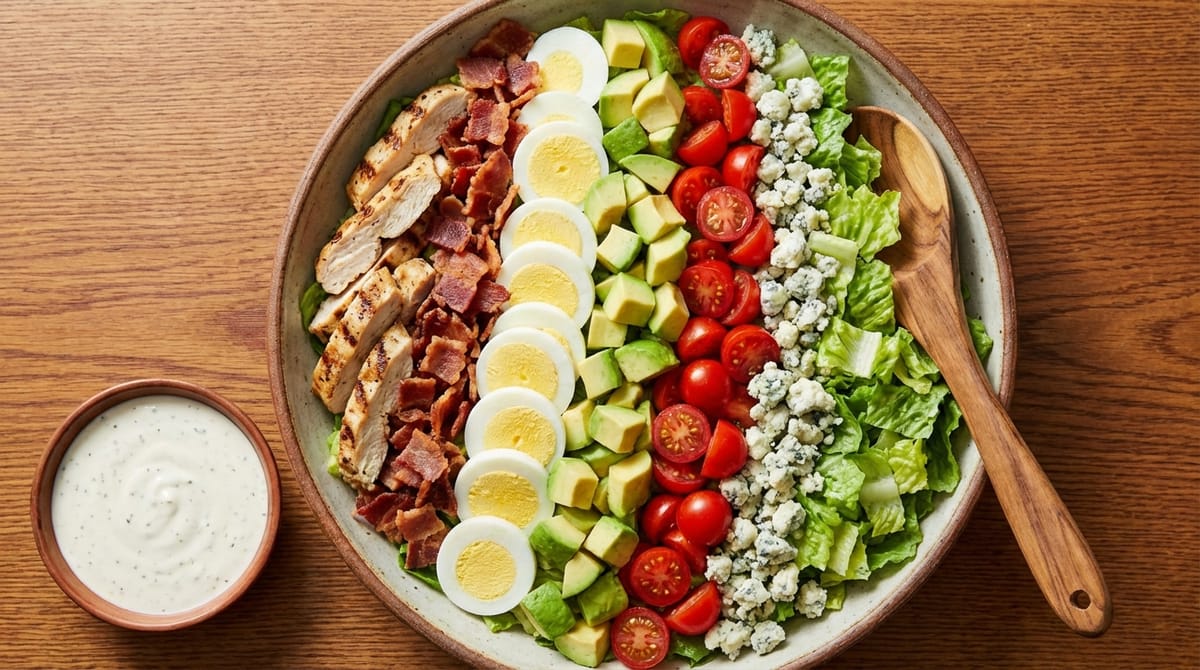
- Arrange the toppings in neat rows or sections across the lettuce: chicken, bacon, hard-boiled eggs, avocado, tomatoes, cucumbers, blue cheese crumbles, and shredded cheese. This traditional presentation showcases each ingredient and allows diners to see exactly what they're getting.
- Drizzle ranch dressing over the entire salad just before serving, or serve the dressing on the side to allow guests to control their own portions.
- Toss the salad at the table immediately before eating to distribute the dressing and combine flavors, or allow each person to toss their individual portion.
The Essential Components of a Loaded Cobb Salad
Understanding each ingredient's role helps you make informed substitutions and appreciate why this particular combination has endured for decades. The foundation starts with crisp lettuce - traditionally romaine for its sturdy leaves and mild flavor that won't compete with the toppings. Some versions incorporate mixed greens or baby spinach for added nutrients and color variation, creating visual interest while maintaining the structural integrity needed to support heavier ingredients.
Protein forms the heart of what makes this salad a complete meal. Marinated or grilled chicken provides lean protein with a neutral flavor profile that accepts the dressing without clashing. The bacon adds a second protein source along with smoky, salty notes and a crispy texture that contrasts beautifully with softer elements. Hard-boiled eggs contribute additional protein while adding a creamy texture and subtle richness that binds other flavors together.
The vegetable and fruit components bring freshness and acidity. Tomatoes provide juicy bursts of brightness that cut through richer ingredients. Cucumbers add crunch and a clean, refreshing quality. Avocado, while technically a fruit, functions as a creamy element that adds healthy fats and a buttery texture that mellows the sharper flavors.
Cheese serves dual purposes in a loaded Cobb salad. Blue cheese crumbles deliver bold, tangy flavor with a distinctive sharpness that elevates the entire dish. Colby, cheddar, or pepper jack cheese provides a milder, creamy element that appeals to those who find blue cheese too assertive. Using both types creates layers of cheese flavor from subtle to pronounced.
Making Perfect Homemade Ranch Dressing
While quality store-bought ranch dressing certainly works, homemade versions take your Cobb salad to another level with fresher flavors and the ability to control ingredients. A basic ranch dressing requires just a few components: a creamy base, herbs, aromatics, and acid for brightness.
Start with 1 cup of mayonnaise and 1/2 cup of sour cream or Greek yogurt as your foundation. The mayonnaise provides richness and body, while sour cream or yogurt adds tang and a slightly lighter texture. For a thinner consistency that drizzles more easily, add 2-4 tablespoons of buttermilk or regular milk.
The herb and seasoning blend typically includes 2 teaspoons dried dill, 1 teaspoon dried parsley, 1 teaspoon dried chives, 1/2 teaspoon garlic powder, 1/2 teaspoon onion powder, 1/4 teaspoon black pepper, and 1/4 teaspoon salt. Fresh herbs work even better if available - use triple the amount of fresh herbs compared to dried. Whisk everything together and refrigerate for at least 30 minutes before serving to allow flavors to meld. Homemade ranch keeps refrigerated for up to one week.
For a Southwestern ranch variation that pairs beautifully with Cobb salads, add 1 teaspoon cumin, 1/2 teaspoon chili powder, a squeeze of lime juice, and 2 tablespoons of chopped fresh cilantro to your base ranch recipe. This zesty version complements chicken particularly well and adds an unexpected twist to the traditional preparation.
Ingredient Variations and Substitutions
The loaded Cobb salad framework accepts numerous variations while maintaining its essential character. For the protein, grilled steak makes an excellent substitution for chicken, particularly skirt steak or flank steak sliced thin against the grain. Shrimp works beautifully for a seafood version, while vegetarians can use crispy chickpeas, grilled tofu, or additional hard-boiled eggs to maintain protein levels.
Cheese variations extend beyond the classic blue cheese and cheddar combination. Pepper jack cheese adds a spicy kick that pairs well with Southwestern-seasoned chicken. Cotija cheese, a crumbly Mexican cheese with a salty, tangy profile, creates an interesting fusion variation. Feta cheese offers a Mediterranean twist with its briny flavor and creamy-crumbly texture. For those who find blue cheese too pungent, gorgonzola provides a milder alternative with similar characteristics.
Vegetable additions can transform your Cobb salad into new territory. Black beans and corn kernels create a Southwestern profile, especially when paired with pico de gallo and cilantro. Red onion adds sharp bite and color contrast. Bell peppers contribute sweetness and crunch. Crispy onions or tortilla strips provide textural interest and a satisfying crunch that elevates each bite.
Green base alternatives offer different nutritional profiles and flavors. Baby spinach increases iron and vitamins while providing a more delicate texture. Iceberg lettuce maximizes crunch factor with minimal flavor interference. A spring mix combination brings color variety and diverse textures. Chopped kale, when massaged lightly with dressing beforehand, creates a heartier, more substantial base that holds up well for meal prep.
Meal Prep and Storage Strategies
Cobb salads excel as meal prep options when you employ proper storage techniques that prevent sogginess and maintain ingredient freshness. The key lies in keeping components separate until serving time, allowing you to assemble fresh salads throughout the week without sacrificing quality.
Prepare all ingredients on a single prep day, storing each component in separate airtight containers. Cook and chop chicken, fry and crumble bacon, hard-boil and chop eggs, and prepare vegetables. Store the lettuce separately, washed and thoroughly dried, wrapped in paper towels inside a container or bag to absorb excess moisture. Avocado should be cut fresh each day to prevent browning, though a squeeze of lemon juice can extend its appearance for 24 hours.
For grab-and-go convenience, use mason jars or similar containers with tight-fitting lids. Layer ingredients strategically: dressing on the bottom, followed by sturdy vegetables like cucumbers and tomatoes, then proteins and cheese, with lettuce on top. When you're ready to eat, shake the jar or pour contents into a bowl and toss. This method keeps ingredients fresh for 3-4 days.
Alternatively, portion ingredients into divided containers with separate compartments. This approach gives you maximum flexibility to customize each salad and ensures nothing gets soggy. Store dressing separately in small containers or use portion-control cups. Properly stored components remain fresh for 4-5 days, though bacon may lose some crispness after day three.
Nutritional Benefits and Dietary Adaptations
A loaded Cobb salad delivers impressive nutritional value when built with quality ingredients. The combination of lean protein from chicken and eggs, healthy fats from avocado, fiber from vegetables and greens, and calcium from cheese creates a balanced macronutrient profile that sustains energy for hours. A typical serving provides 25-35 grams of protein, 20-30 grams of fat (much of it healthy monounsaturated fat from avocado), and 10-15 grams of carbohydrates with substantial fiber.
For those following specific dietary patterns, the Cobb salad adapts readily. Keto and low-carb dieters can enjoy this salad with minimal modifications - simply skip any sweet dressings and ensure your ranch contains no added sugars. The net carbohydrate count typically ranges from 8-12 grams per serving, making it perfectly suitable for ketogenic meal plans. The high fat content from avocado, cheese, bacon, and ranch dressing aligns perfectly with keto macros.
Paleo followers can adapt the recipe by using compliant bacon without added sugars, making ranch dressing with paleo-approved mayonnaise, and omitting the cheese. The resulting salad remains satisfying and flavorful while adhering to paleo principles. Whole30 participants can make similar modifications, ensuring all ingredients meet program requirements.
For calorie-conscious diners, lighter versions maintain the essential Cobb character while reducing calories. Use grilled chicken breast instead of thighs, turkey bacon instead of pork bacon, and light ranch dressing or a vinaigrette alternative. Reduce cheese portions and increase vegetable quantities. These modifications can cut 200-300 calories per serving while preserving the satisfying, complete-meal quality that makes Cobb salads so appealing.
Presentation and Serving Suggestions
Visual presentation elevates a Cobb salad from everyday lunch to impressive entertaining fare. The traditional approach arranges ingredients in neat parallel rows across a bed of greens on a large rectangular platter. This method showcases each component and creates an Instagram-worthy presentation that impresses guests before they take their first bite.
For individual servings, use wide, shallow bowls that provide ample surface area for arranging ingredients in sections rather than piling them high. This approach maintains the visual appeal while making the salad easier to eat. Consider arranging ingredients in a color pattern - alternating light and dark elements creates visual rhythm and makes the dish more appetizing.
Garnishing adds the finishing touch that signals attention to detail. A sprinkle of fresh chives or parsley over the top adds color and freshness. A few extra blue cheese crumbles scattered across provides visual interest. Freshly cracked black pepper adds specks of contrast. For Southwestern variations, a lime wedge on the side and a sprinkle of fresh cilantro complete the presentation.
Serving temperature matters more than many home cooks realize. All components should be cool but not ice-cold, as extreme cold mutes flavors. Remove ingredients from the refrigerator 10-15 minutes before assembly to allow them to come closer to room temperature. The exception is lettuce, which should remain crisp and cold until the moment of serving.
Common Mistakes and How to Avoid Them
Even straightforward recipes like Cobb salad can go wrong without attention to key details. The most common mistake involves wet lettuce, which dilutes dressing and creates a watery, unappetizing salad. Always wash greens well in advance and dry them thoroughly using a salad spinner or by patting with clean kitchen towels. Any moisture remaining on lettuce will compromise your final result.
Overdressing ranks as another frequent error. Too much dressing overwhelms the carefully balanced flavors and makes the salad heavy and soggy. Start with less dressing than you think you need - you can always add more, but you cannot remove excess. Aim for 2-3 tablespoons per serving, adjusting based on personal preference. Toss salads just before eating rather than in advance to prevent wilting.
Ingredient temperature discrepancies create an unpleasant eating experience. Cold chicken straight from the refrigerator paired with room-temperature avocado and hot bacon produces confusing sensory signals. Prepare all components and allow them to reach similar temperatures before assembly. If using freshly cooked bacon, let it cool to room temperature rather than adding it hot to cold greens.
Proportion imbalance undermines the Cobb salad concept. Too much lettuce and not enough toppings results in a boring salad with occasional bites of good stuff. Conversely, skimping on greens creates an unbalanced, overly rich dish. Aim for roughly equal visual weight between the lettuce base and the combined toppings, ensuring every bite captures multiple elements.
Conclusion
The loaded Cobb salad with ranch dressing represents more than just a collection of ingredients on lettuce - it exemplifies how thoughtful component selection and proper technique transform simple elements into something greater than the sum of its parts. By understanding the role each ingredient plays, from the crisp romaine foundation to the creamy ranch finish, you can create consistently excellent results that satisfy as a complete meal.
Success with Cobb salads comes down to quality ingredients, proper preparation, and smart assembly. Fresh vegetables, properly cooked proteins, and homemade or high-quality ranch dressing make all the difference between a mediocre salad and one that becomes a regular rotation staple. The versatility of this dish means you can adapt it to dietary needs, seasonal ingredients, and personal preferences while maintaining the essential character that makes it a beloved classic.
Whether you're meal prepping for busy weekdays, serving a casual lunch to guests, or simply craving a satisfying yet fresh meal, the loaded Cobb salad delivers. Master the basic version first, then experiment with variations that reflect your taste preferences and dietary goals. With these techniques and insights, you'll create restaurant-quality Cobb salads that look impressive and taste even better.