Mango Pineapple Smoothie Bowl with Granola Recipe
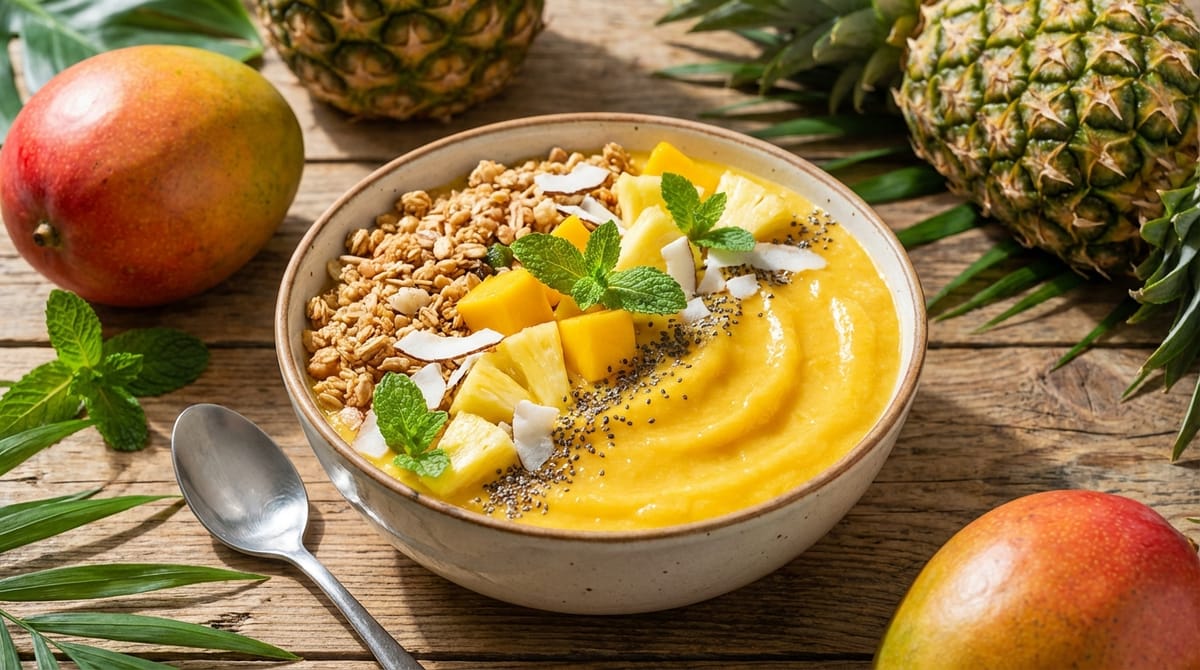
Smoothie bowls have transformed the way we think about breakfast, turning a drinkable meal into an interactive, visually stunning experience. The mango pineapple smoothie bowl with granola stands out as a tropical powerhouse that delivers both nutrition and satisfaction. With its thick, creamy texture and vibrant golden color, this breakfast option provides a refreshing alternative to traditional morning meals while packing in essential vitamins, minerals, and fiber.
What makes this particular smoothie bowl exceptional is its versatility and simplicity. Unlike complicated breakfast recipes that require extensive preparation, this tropical creation comes together in just five minutes using a handful of ingredients. The combination of frozen mango and pineapple creates a naturally sweet base that requires no added sugars, while the granola topping adds a satisfying crunch that transforms the smooth texture into a complete sensory experience. Whether you're looking for a post-workout refuel, a light summer breakfast, or a nutrient-dense snack, this smoothie bowl delivers on all fronts.
The Complete Recipe
Creating the perfect mango pineapple smoothie bowl requires attention to proportions and technique. The key to achieving that signature thick, spoonable consistency lies in using frozen fruit and minimal liquid. Here's everything you need to make this tropical breakfast masterpiece.
Ingredients
- 2 1/2 cups frozen mango chunks
- 2 1/2 cups frozen pineapple chunks
- 1 medium banana (fresh or frozen)
- 1 cup Greek yogurt (plain or vanilla)
- 1/4 cup liquid (orange juice, almond milk, or coconut water)
For Toppings
- 1/2 cup granola
- Fresh mango slices
- Fresh pineapple chunks
- Unsweetened coconut flakes
- Chia seeds or hemp seeds
- Fresh blueberries or kiwi slices (optional)
Instructions
- Add the Greek yogurt and banana to your blender first, as this helps create a smoother blend.
- Layer the frozen mango and pineapple chunks on top of the yogurt mixture.
- Begin blending on low speed, gradually increasing to high. Use a tamper tool if your blender has one to push ingredients toward the blades.
- Add liquid one tablespoon at a time, only as needed to help the blending process. Remember, you want a thick consistency that requires a spoon, not a straw.
- Blend until completely smooth but still thick enough to hold toppings without them sinking.
- Pour or spoon the smoothie mixture into serving bowls, using a spatula to create a smooth surface.
- Arrange your toppings artistically across the surface, creating sections or patterns as desired.
- Serve immediately for the best texture and temperature.
This recipe yields two generous bowls, each containing approximately 379 calories with an impressive nutritional profile: 79 grams of carbohydrates, 15 grams of protein, 4 grams of fat, and 8 grams of fiber. The vitamin content is particularly noteworthy, with each serving providing 2,517 IU of vitamin A and a remarkable 194 milligrams of vitamin C.
Nutritional Benefits and Health Impact
The mango pineapple smoothie bowl isn't just delicious - it's a nutritional powerhouse that supports overall health in multiple ways. Mangoes are exceptionally rich in beta-carotene and vitamin A, which support eye health, immune function, and skin integrity. A single serving of this smoothie bowl can provide over 100% of your daily vitamin C requirement, thanks to the combined power of mango and pineapple.
Pineapple brings its own nutritional advantages to the bowl. This tropical fruit contains bromelain, an enzyme with anti-inflammatory properties that may aid digestion and reduce muscle soreness after exercise. The high potassium content, at 845 milligrams per serving, supports heart health and helps regulate blood pressure. When you factor in the protein from Greek yogurt and the fiber from both the fruit and granola toppings, you're looking at a breakfast that provides sustained energy without the crash associated with refined carbohydrates.
The fiber content deserves special attention. With 8 grams per serving from the base recipe alone, this smoothie bowl supports digestive health and promotes feelings of fullness that can help with weight management. Adding chia seeds or hemp seeds as toppings can boost the fiber content even further while contributing omega-3 fatty acids. The relatively low sodium content of just 51 milligrams makes this an excellent choice for those monitoring their salt intake.
Mastering the Perfect Consistency
The difference between a smoothie bowl and a regular smoothie comes down to texture. Achieving that perfect thick, creamy consistency that holds toppings without being icy or chunky requires understanding a few key principles.
First, frozen fruit is non-negotiable. Fresh fruit simply won't create the thick texture needed for a proper smoothie bowl. The frozen mango and pineapple should be solid when added to the blender. Some recipes suggest letting frozen fruit sit at room temperature for a few minutes before blending, but this actually works against you when making bowls rather than drinkable smoothies.
The liquid-to-solid ratio is critical. Start with minimal liquid and add only what's necessary to get the blender moving. Different blenders have varying power levels, so high-powered blenders like Vitamix models may require less liquid than standard blenders. If you add too much liquid and thin out your smoothie, you can salvage it by adding more frozen fruit or even a handful of ice cubes, though this may dilute the flavor slightly.
Blending technique matters too. Pulse the blender initially to break up the frozen chunks, then blend continuously while using a tamper to push ingredients toward the blades. Scrape down the sides as needed. The mixture should be thick enough that it resists the blender blades slightly - this resistance indicates you've achieved the right consistency. When properly prepared, the smoothie should hold its shape when spooned into a bowl and create a stable surface for toppings.
Creative Topping Combinations
While granola serves as the classic smoothie bowl topping, the possibilities extend far beyond this single option. The art of topping a smoothie bowl involves balancing textures, colors, and nutritional benefits to create both visual appeal and enhanced flavor.
Granola provides essential crunch and adds complex carbohydrates for sustained energy. Whether you use store-bought varieties or make your own, look for options with whole grains, nuts, and minimal added sugars. A homemade granola can be prepared by combining rolled oats, sliced almonds, honey or agave, and coconut oil, then baking at 350 degrees Fahrenheit for 30 minutes until golden and toasted. This creates clusters that add substantial texture to your bowl.
Fresh fruit toppings complement the frozen fruit base by adding different textures and flavor notes. Sliced kiwi brings tartness and vibrant green color, while fresh blueberries add antioxidants and visual contrast. Mandarin orange segments contribute citrus brightness, and additional fresh mango or pineapple chunks reinforce the tropical theme. Arranging these fruits in sections or patterns transforms your breakfast into an Instagram-worthy creation.
Seeds and nuts offer nutritional upgrades. Chia seeds provide omega-3 fatty acids and create an interesting gel-like texture when they absorb moisture from the smoothie. Hemp seeds add complete protein and have a subtle nutty flavor. Flax seeds contribute lignans and fiber. Macadamia nuts bring healthy fats and a buttery richness that pairs beautifully with tropical fruits. Coconut flakes, whether sweetened or unsweetened, enhance the tropical profile while adding healthy medium-chain triglycerides.
Nut butters create flavor swirls and add protein. A drizzle of almond butter, cashew butter, or peanut butter across the surface adds richness and helps keep you satisfied longer. Some people enjoy adding a light drizzle of honey or agave nectar for extra sweetness, though the natural sugars in the fruit often provide sufficient sweetness on their own.
Variations and Customizations
The basic mango pineapple smoothie bowl serves as an excellent foundation for experimentation. Understanding how to modify the recipe allows you to adapt it to dietary preferences, nutritional goals, and ingredient availability.
For a vegan version, simply replace the Greek yogurt with plant-based alternatives. Coconut yogurt works particularly well with the tropical flavor profile, while almond or cashew yogurt provides neutral bases that let the fruit flavors shine. You can also use silken tofu for a protein boost without dairy. When making this substitution, you may need to adjust the liquid quantity slightly, as plant-based yogurts often have different consistencies than dairy versions.
Adding greens transforms this into a green smoothie bowl without significantly altering the taste. A handful of spinach or kale blends seamlessly into the mixture, hidden by the strong mango and pineapple flavors. This addition boosts the iron, calcium, and vitamin K content while maintaining the appealing golden color - though it may shift slightly toward a more muted tone.
Protein powder can be incorporated for those seeking higher protein content, particularly useful for post-workout recovery. Vanilla protein powder complements the tropical fruits nicely, while unflavored options disappear into the background. Start with one scoop and adjust the liquid accordingly, as protein powder absorbs moisture and can thicken the mixture.
For those following seed cycling protocols or looking to boost specific nutrients, the smoothie bowl provides an excellent vehicle. Ground flax seeds, pumpkin seeds, sunflower seeds, and sesame seeds can all be blended into the base or sprinkled on top. Green powders like spirulina or chlorella add nutrient density, though they will affect the color and may introduce earthy flavors that some find less appealing.
Quinoa presents an unexpected but nutritious addition. Cooked and cooled quinoa can be blended into the smoothie base, adding complete protein and creating an even thicker texture. This modification increases the calorie and protein content while providing all nine essential amino acids. When using quinoa, reduce the frozen fruit slightly to maintain the proper consistency.
Practical Tips for Meal Prep and Storage
Smoothie bowls work best when consumed immediately after preparation, but busy schedules often require advance planning. Understanding proper storage and meal prep techniques ensures you can enjoy this tropical breakfast even on hectic mornings.
Freezing smoothie packs streamlines the morning routine significantly. Portion out the frozen mango, pineapple, and banana into individual freezer bags or containers. When ready to make your smoothie bowl, simply dump one pack into the blender with yogurt and liquid. This method eliminates measuring and reduces cleanup. Properly stored, these packs maintain quality for up to three months.
Pre-portioning toppings saves additional time. Store granola in airtight containers to maintain crunchiness. Prep fresh fruit toppings the night before and store them in small containers in the refrigerator. Seeds and coconut flakes can be combined into a topping mix and kept in a jar for easy sprinkling. This grab-and-go approach makes smoothie bowls feasible even when you're rushing out the door.
Regarding the smoothie base itself, storage is trickier. Once blended, smoothie bowls begin to separate and lose their ideal texture within 30 minutes. If you must prepare the base ahead, store it in an airtight container in the refrigerator for no more than 24 hours. Before serving, re-blend briefly or stir vigorously to restore the smooth consistency. The texture won't be quite as perfect as freshly blended, but it remains acceptable.
For institutional settings like schools or cafeterias, a different approach works better. Serve the smoothie in containers alongside separate small containers of toppings, allowing individuals to assemble their own bowls. This maintains the integrity of each component and keeps granola from becoming soggy. When following food safety protocols, keep all components below 41 degrees Fahrenheit until service time.
Troubleshooting Common Issues
Even with a straightforward recipe, certain challenges can arise when making smoothie bowls. Knowing how to address these issues ensures consistent results.
If your smoothie is too thin and runny, you've added too much liquid. The fix is to add more frozen fruit, a handful of ice cubes, or a few spoonfuls of frozen yogurt. Blend again until the desired thickness is achieved. To prevent this issue in future batches, add liquid more conservatively - you can always add more, but you can't remove it once it's in the blender.
When the smoothie won't blend at all, the fruit may be too frozen or packed too tightly. Let it sit at room temperature for 2-3 minutes to slightly soften the exterior of the frozen chunks. Alternatively, add a bit more liquid and use the pulse function to break up the large pieces before switching to continuous blending. If your blender has a tamper tool, use it aggressively to push ingredients toward the blades. Some blenders simply lack the power for thick smoothie bowls - in this case, a slightly thinner consistency may be necessary.
Icy or grainy texture instead of smooth creaminess usually indicates insufficient blending time. Continue blending longer, even if it seems like the mixture is already smooth. The banana and yogurt need time to fully incorporate and create that creamy mouthfeel. High-powered blenders accomplish this faster than standard models.
If the flavor seems bland despite using ripe fruit, the issue might be the banana. Overripe bananas with brown spots provide more sweetness and flavor than firm yellow ones. Additionally, frozen fruit sometimes tastes less intense than fresh, so you may need to use slightly more than you think. A squeeze of fresh lime juice can brighten the tropical flavors and make them more pronounced.
Toppings sinking into the smoothie base indicate the mixture is too thin or warm. Ensure your smoothie is properly thick before adding toppings, and work quickly after blending while everything is still cold. If your kitchen is particularly warm, consider chilling your serving bowls in the freezer for 10 minutes before assembling.
Conclusion
The mango pineapple smoothie bowl with granola represents the perfect intersection of convenience, nutrition, and culinary satisfaction. This tropical breakfast option delivers substantial health benefits through its impressive vitamin C and A content, high fiber levels, and balanced macronutrient profile. The 5-minute preparation time makes it accessible even for the busiest mornings, while the customization possibilities ensure it never becomes boring.
Success with smoothie bowls comes down to mastering consistency through proper frozen fruit-to-liquid ratios and understanding how to layer toppings for both visual appeal and textural contrast. Whether you stick with the classic combination of granola, coconut flakes, and fresh fruit or experiment with seeds, nuts, and creative additions like quinoa, this recipe provides a flexible framework for endless variations.
By preparing smoothie packs in advance and pre-portioning toppings, you can make this nutritious breakfast a regular part of your routine without adding stress to your mornings. The result is a meal that feels indulgent and special while supporting your health goals - a rare combination that makes the mango pineapple smoothie bowl with granola worth adding to your regular breakfast rotation.
Sources
- Jar of Lemons - Pineapple Mango Smoothie Bowl
- Mindful by Sodexo - Mango Pineapple Smoothie Bowl
- Hint of Healthy - Mango Pineapple Smoothie Bowl Recipe
- Primal Palate - Mango Smoothie Bowl
- Bakerita - Mango Pineapple Smoothie Bowl
- Danone Away From Home - Tropical Mango Smoothie Breakfast Bowl
- One Pot Pia - Mango Pineapple Smoothie Bowl
- Cooking on the Front Burners - Mango Pineapple Smoothie Bowl