New Orleans Beignets with Powdered Sugar and Chicory Coffee
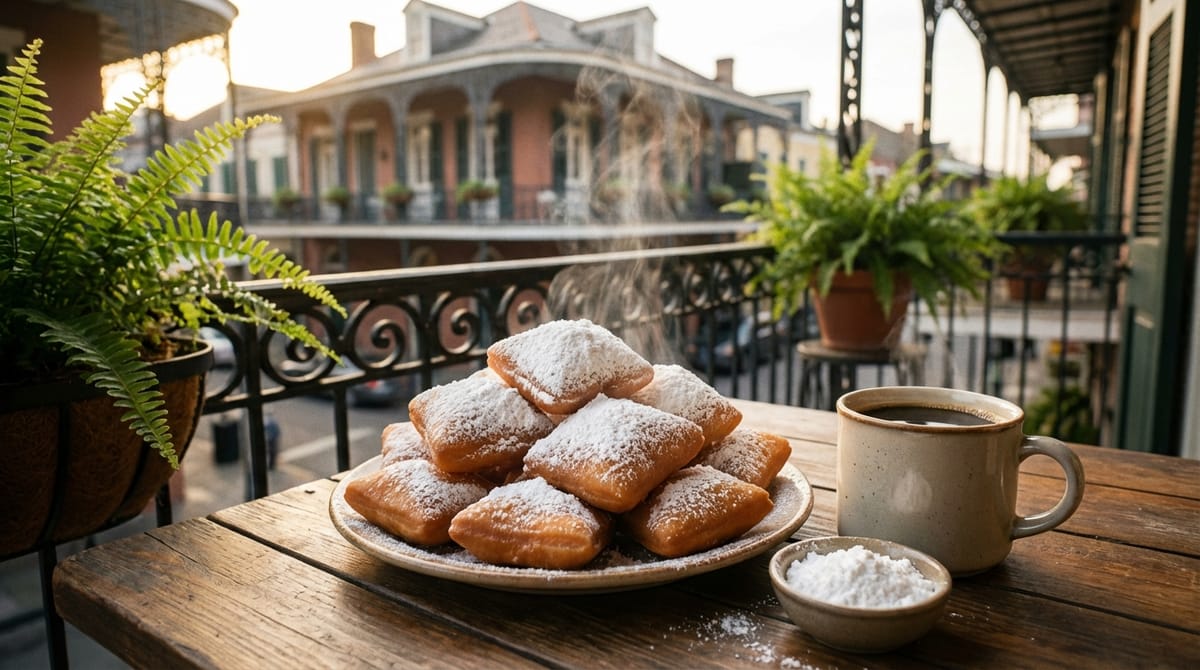
Beignets hold such significance in Louisiana culture that the state legislature declared them the official state doughnut in 1986. These golden, puffy squares of fried dough, buried under a mountain of powdered sugar, represent more than just a sweet treat - they embody the culinary soul of New Orleans. Paired with chicory-laced café au lait, beignets create a flavor combination that has captivated locals and visitors for over 160 years.
The appeal of a proper beignet lies in its contrasts: crispy exterior giving way to a pillowy, tender interior, the sweetness of powdered sugar balanced by the slightly bitter complexity of chicory coffee. Whether enjoyed as a Fat Tuesday breakfast during Mardi Gras celebrations or as an afternoon indulgence in the French Quarter, beignets transcend time of day. They're served hot, typically in orders of three, though anyone who has experienced their addictive qualities knows that three is merely a starting point.
Making authentic New Orleans beignets at home requires understanding both technique and tradition. The process demands patience - from activating yeast to achieving the perfect frying temperature - but the reward is experiencing a taste of the French Quarter in your own kitchen.
Classic New Orleans Beignets Recipe
Creating authentic beignets requires precision with ingredients and timing. This recipe yields approximately 24 beignets, serving 4-6 people generously.
Ingredients for Beignets:
- 2 1/4 teaspoons active dry yeast
- 1/4 cup granulated sugar
- 1/2 cup warm water (110°F)
- 1/2 cup evaporated milk
- 1 large egg
- 1/4 cup unsalted butter, melted
- 1 teaspoon salt
- 4 cups all-purpose flour
- Vegetable oil for frying (enough for 2 inches depth)
- Powdered sugar for generous dusting
Ingredients for Chicory Coffee:
- 1/2 cup coffee beans
- 2 tablespoons chicory granules
- 2 cups water for brewing
- 2 cups milk for café au lait
Preparation Instructions:
- Begin by activating the yeast. Combine warm water (exactly 110°F) with the granulated sugar in a small bowl. Sprinkle the yeast over the surface and let stand until the mixture becomes foamy, approximately 10 minutes. This step ensures your yeast is alive and ready to create those signature airy pockets.
- In a large mixing bowl, combine the foamy yeast mixture with evaporated milk, egg, and melted butter. Whisk these wet ingredients together until fully incorporated.
- Add the salt to your flour, then gradually incorporate the flour into the wet mixture, one cup at a time. Mix until a soft, slightly sticky dough forms. The dough should pull away from the bowl sides but remain tacky to the touch.
- Transfer the dough to a lightly floured surface and knead gently for 2-3 minutes until smooth. Place in a greased bowl, cover with a damp cloth, and let rise in a warm location until doubled in size, about 1.5 to 2 hours.
- Once risen, punch down the dough and turn it out onto a floured surface. Roll the dough to a thickness of 1/4 to 3/8 inch - this specific thickness is crucial for achieving the proper texture balance.
- Using a sharp knife or pizza cutter, cut the dough into 2-inch squares. Traditional New Orleans beignets are always square, never round.
- Heat vegetable oil in a heavy-bottomed pot or deep fryer to exactly 350°F. Maintaining this temperature is essential - too hot and the exterior burns before the interior cooks; too cool and the beignets absorb excess oil.
- Fry the dough squares in small batches, 3-4 at a time to avoid crowding. They will puff up and float. Fry for approximately 2-3 minutes per side until golden brown, flipping once.
- Remove with a slotted spoon and drain briefly on paper towels. While still hot, dust generously - and we mean generously - with powdered sugar. The traditional approach involves so much powdered sugar that it creates a small cloud with each bite.
The History and Cultural Significance of Beignets
Beignets arrived in Louisiana with French colonists, though their origins trace back even further to ancient Rome. The French brought their tradition of fried dough pastries to New Orleans, where the recipe evolved to suit local tastes and available ingredients. The word "beignet" itself comes from the French term for "bump" or "lump," referring to the irregular, puffy shape these pastries take when fried.
The most iconic establishment serving beignets, Café Du Monde, opened its doors in 1862 in the French Market. This institution has served fried-to-perfection beignets continuously for over 160 years, establishing what many consider the gold standard. The café operates 24 hours a day, closing only on Christmas Day and during hurricanes, a testament to the unwavering demand for these beloved pastries.
Beignets became so intertwined with Louisiana identity that formal recognition was inevitable. The 1986 legislative designation as the official state doughnut cemented their place in culinary history, though locals needed no official proclamation to understand their importance.
Understanding Chicory Coffee and Café au Lait
Chicory coffee represents a uniquely New Orleans adaptation born from necessity. During the Civil War, when Union naval blockades made coffee scarce and expensive, resourceful New Orleanians began stretching their coffee supplies by adding roasted chicory root. The practice continued after the war ended because locals discovered they preferred the distinctive flavor profile.
Chicory root, when roasted and ground, produces a slightly bitter, woody flavor with subtle chocolate undertones. This bitterness perfectly counterbalances the intense sweetness of powdered sugar-laden beignets. The combination creates a flavor harmony that has become inseparable from the authentic New Orleans experience.
Café au lait takes this chicory coffee blend and adds equal parts hot milk, creating a smooth, creamy beverage less intense than straight coffee but more complex than a standard latte. The traditional preparation involves brewing strong coffee with chicory, then simultaneously pouring hot coffee and hot milk into the cup from separate pitchers, creating a perfect blend. The milk softens the chicory's edge while maintaining enough coffee character to stand up to the beignets' sweetness.
Mastering the Frying Technique
Temperature control separates mediocre beignets from exceptional ones. Invest in a reliable kitchen thermometer and monitor your oil temperature constantly. At 350°F, the dough's exterior sets quickly, creating a barrier that prevents excessive oil absorption while allowing the interior to cook through and develop those characteristic air pockets.
When you add dough squares to the oil, they should sink briefly before floating to the surface within seconds. If they don't float quickly, your oil isn't hot enough. If they brown within the first 30 seconds, reduce the heat immediately.
Avoid overcrowding the pot. Each beignet needs space to expand - they can double or even triple in size during frying. Crowding lowers the oil temperature and prevents proper puffing. Fry in batches of three to four pieces, allowing the oil to return to temperature between batches. This patience ensures consistency across all your beignets.
The flip is equally important. Wait until the bottom side achieves a deep golden brown before turning. Use a slotted spoon or spider strainer rather than tongs, which can deflate the delicate structure. A gentle flip maintains the air pockets that create that pillowy texture.
The Art of Powdered Sugar Application
Powdered sugar application isn't merely a finishing touch - it's an integral component of the beignet experience. The traditional approach involves placing hot beignets in a large bowl and literally showering them with powdered sugar from a shaker or sifter. The heat causes some sugar to melt slightly, creating a thin glaze, while the rest forms a thick, sweet coating.
Don't be shy with the sugar. A proper New Orleans beignet should leave powdered sugar on your hands, face, and clothing. The sugar cloud that rises when you bite into a fresh beignet is part of the charm. Some establishments go through hundreds of pounds of powdered sugar weekly, a testament to the generous application expected.
Timing matters here too. Sugar the beignets while they're still hot from the fryer. The residual heat helps the sugar adhere and creates that characteristic appearance where sugar both coats and partially melts into the surface. If beignets cool too much before sugaring, the coating won't achieve the same effect.
Variations and Modern Interpretations
While purists insist on the classic preparation, modern interpretations have emerged. Some cooks add a drizzle of chocolate sauce over the powdered sugar, creating a dessert-like variation. Others experiment with filled beignets, injecting fruit preserves, chocolate, or cream cheese after frying.
Savory beignets have gained popularity in contemporary New Orleans restaurants, incorporating ingredients like crawfish, andouille sausage, or cheese into the dough. These variations maintain the frying technique and pillowy texture while exploring different flavor profiles.
For those seeking convenience, pre-made beignet mixes offer a shortcut. These products, which include the dry ingredients pre-measured, require only the addition of warm water. While they don't quite match the depth of flavor achieved with a from-scratch recipe, they produce respectable results in a fraction of the time and have introduced countless home cooks to beignet-making.
Serving Suggestions and Pairing Notes
Beignets shine brightest when served immediately after frying. The contrast between the crispy exterior and steaming interior diminishes as they cool, though they remain delicious at room temperature. For the most authentic experience, serve them in orders of three on a small plate, with additional powdered sugar available for those who want even more.
The café au lait pairing isn't merely traditional - it's essential. The coffee's bitterness cuts through the sweetness, cleansing your palate between bites. Prepare your coffee just before serving the beignets, ensuring both arrive at the table hot. The ritual of alternating between sweet beignet bites and sips of chicory-laced coffee creates a rhythm that enhances both elements.
For a complete New Orleans breakfast experience, consider adding fresh fruit or orange juice alongside your beignets and coffee. The acidity provides another dimension of contrast, though many locals would argue that beignets and café au lait need no accompaniment.
Conclusion
Mastering New Orleans beignets requires attention to detail, from yeast activation through final sugar dusting, but the process is straightforward enough for home cooks of any skill level. The key elements - proper dough consistency, correct frying temperature, and generous powdered sugar application - combine to create a pastry that has remained essentially unchanged for generations.
The pairing with chicory coffee elevates beignets from simple fried dough to a complete culinary experience. This combination represents New Orleans food culture at its finest: born from necessity, perfected through tradition, and celebrated as an essential part of Louisiana identity. Whether you're preparing them for a Mardi Gras celebration or a quiet Sunday morning, homemade beignets bring a taste of the French Quarter into your kitchen, powdered sugar cloud and all.