Pot Roast with Carrots, Potatoes, and Rich Pan Gravy
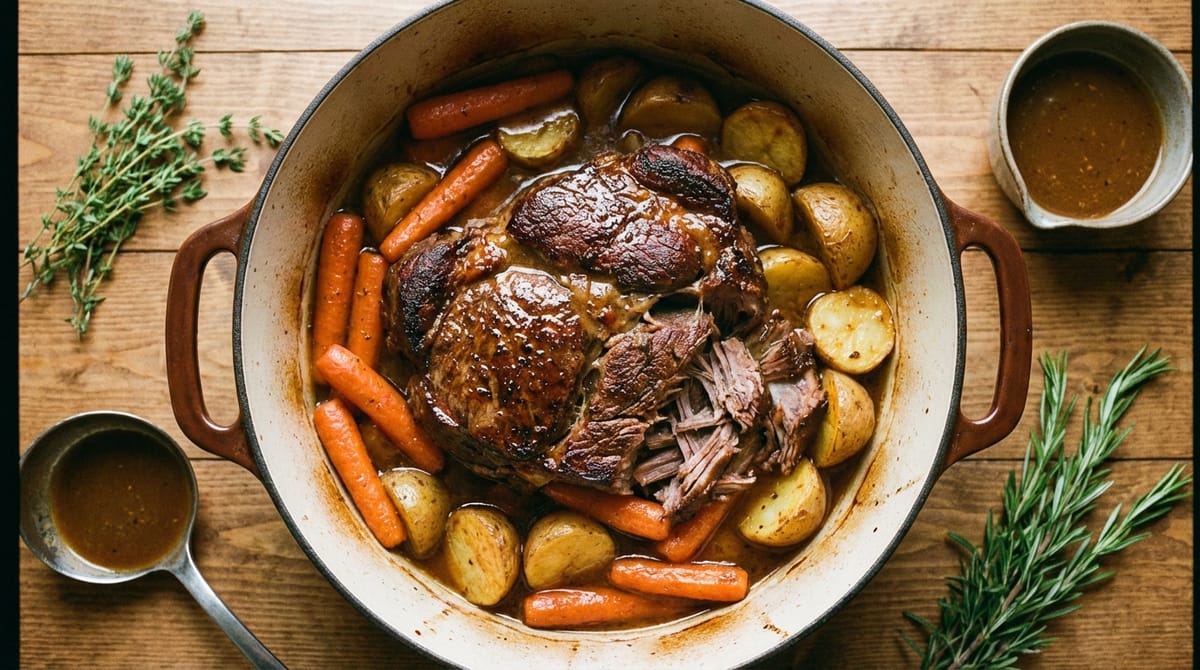
Few dishes deliver comfort quite like a properly executed pot roast. This isn't about complicated techniques or exotic ingredients - it's about transforming an inexpensive cut of beef into something extraordinary through patience and proper method. The result is fork-tender meat that practically falls apart, vegetables infused with rich beefy flavor, and a gravy so good you'll want it on everything.
The beauty of pot roast lies in its simplicity and reliability. Whether you're cooking for Sunday dinner or need a hands-off meal that handles itself while you tackle other tasks, this dish adapts to your schedule. The slow cooking process breaks down tough connective tissue in the beef, turning it silky and tender while building layers of flavor that permeate every component of the meal.
Understanding the fundamentals - from selecting the right cut to building proper gravy - makes the difference between a mediocre pot roast and one that becomes a family favorite requested again and again.
The Complete Pot Roast Recipe
This recipe serves 6-8 people and takes approximately 4-5 hours total, with most of that time being hands-off cooking.
Ingredients
- 3-4 pound boneless chuck roast (also called pot roast, blade roast, or arm roast)
- 2 teaspoons kosher salt
- 1 teaspoon freshly ground black pepper
- 2 tablespoons olive oil or vegetable oil
- 1 large yellow onion, sliced into wedges
- 4 cloves garlic, minced or smashed
- 1 pound carrots, peeled and cut into 1.5-inch chunks
- 1.5-2 pounds potatoes (Yukon Gold or red potatoes), cut into 1-inch pieces
- 1 cup red wine (Pinot Noir or other dry red)
- 2 cups beef broth
- 2 tablespoons Worcestershire sauce
- 1 tablespoon tomato paste
- 1 teaspoon dried thyme (or 1 sprig fresh)
- 1 teaspoon dried rosemary (or 2 sprigs fresh)
- 2 bay leaves
- 1/4 cup all-purpose flour (for gravy)
- Fresh parsley for garnish (optional)
Instructions
- Pat the roast completely dry with paper towels. Season generously on all sides with salt and pepper.
- Heat oil in a large Dutch oven over medium-high heat until shimmering. Sear the roast on all sides until deeply browned, about 4-5 minutes per side. Remove and set aside.
- Reduce heat to medium. Add onions to the pot and cook for 3-4 minutes until softened. Add garlic and cook another minute until fragrant.
- Stir in tomato paste and cook for 1 minute. Pour in wine, scraping up all the browned bits from the bottom of the pot.
- Add beef broth, Worcestershire sauce, thyme, rosemary, and bay leaves. Return the roast to the pot along with any accumulated juices.
- Bring to a simmer, then cover and transfer to a 325°F oven. Cook for 2 hours.
- Add carrots and potatoes around the roast. Cover and return to oven for another 1.5-2 hours, until the meat is fork-tender and vegetables are cooked through.
- Transfer roast and vegetables to a serving platter and tent with foil to keep warm.
- To make gravy: Spoon off fat from the cooking liquid and reserve 1/4 cup. Discard excess fat. In a saucepan over low heat, whisk together the reserved fat and flour. Cook for 1 minute until golden.
- Measure the remaining cooking liquid and add water if needed to reach 2 cups. Gradually whisk into the flour mixture. Bring to a boil over medium-high heat, stirring constantly, until thickened (about 1 minute). Season with additional salt and pepper to taste.
- Slice the roast against the grain and serve with vegetables and gravy.
Choosing the Right Cut of Beef
The foundation of exceptional pot roast starts at the butcher counter. Chuck roast, cut from the shoulder area, stands as the gold standard for this dish. This cut contains enough intramuscular fat and connective tissue to remain moist during extended cooking while developing that signature melt-in-your-mouth texture. The marbling breaks down over time, essentially basting the meat from within.
Look for a roast weighing between 3-4 pounds - large enough to feed a crowd but manageable enough to fit comfortably in a standard Dutch oven. The meat should show visible marbling throughout, appearing as thin white lines running through the red muscle. Avoid cuts that look excessively lean, as they'll turn dry and stringy regardless of cooking method.
Butcher labels can vary by region and store, which sometimes causes confusion. Chuck roast might appear as pot roast, blade roast, arm roast, or English roast. Bottom round roast works as an alternative, though it contains less fat and requires careful monitoring to prevent drying. If uncertain, ask your butcher for a well-marbled roast suitable for braising - they'll point you in the right direction.
The Science Behind Searing
Searing the roast before braising isn't just tradition - it's chemistry working in your favor. That deep brown crust develops through the Maillard reaction, a complex process where amino acids and sugars react under high heat to create hundreds of new flavor compounds. These compounds add depth and complexity impossible to achieve through braising alone.
Proper searing requires patience and the right conditions. Pat the meat completely dry before it hits the pan - moisture creates steam, which prevents browning. Heat your oil until it shimmers but doesn't smoke, then lay the roast down gently and resist the urge to move it. Each side needs 4-5 minutes of uninterrupted contact to develop that mahogany crust. The meat will release naturally once properly seared; if it sticks, it needs more time.
Those browned bits stuck to the pan bottom, called fond, contain concentrated flavor that shouldn't go to waste. Deglazing with wine or broth dissolves these particles back into the cooking liquid, enriching the final gravy with layers of savory depth.
Vegetables That Stand Up to Long Cooking
Carrots and potatoes earn their place in pot roast through durability and flavor absorption. Unlike delicate vegetables that disintegrate during extended braising, these sturdy roots maintain their structure while soaking up the rich cooking liquid. Cut them into substantial 1-1.5 inch pieces - anything smaller turns mushy and loses definition.
Timing matters when adding vegetables. Introducing them at the start results in vegetable mush by the time the meat reaches tenderness. Adding them halfway through the cooking process, typically after the first 2 hours, allows them to cook through and absorb flavor without falling apart. Baby potatoes can go in whole if small, while larger potatoes benefit from halving or quartering.
Carrots bring natural sweetness that balances the savory elements, while potatoes add substance and help thicken the cooking liquid slightly as their starches break down. Onions, added early with the aromatics, essentially melt into the braising liquid, contributing sweetness and body to the gravy base.
Building Layers of Flavor
Great pot roast doesn't rely on a single ingredient for flavor - it builds complexity through careful layering. Worcestershire sauce adds umami depth and subtle tang. Tomato paste contributes concentrated savory notes and helps thicken the braising liquid. Garlic and herbs like thyme and rosemary provide aromatic backbone without overwhelming the beef.
Red wine serves multiple purposes beyond adding flavor. Its acidity helps tenderize the meat while its tannins contribute structure to the sauce. The alcohol cooks off during braising, leaving behind concentrated fruit and earth notes that complement the beef. If avoiding alcohol, substitute with additional beef broth plus a tablespoon of red wine vinegar for acidity.
Beef broth forms the liquid base, but quality matters. Homemade stock produces superior results, though high-quality store-bought broth works well. Some cooks enhance store-bought broth with beef bouillon paste or granules for extra intensity. The braising liquid should come about halfway up the roast - too much dilutes flavor, while too little risks burning.
Slow Cooker and Instant Pot Adaptations
While traditional oven braising produces exceptional results, modern appliances offer convenience without major sacrifice. Slow cookers excel at pot roast, maintaining steady low heat for extended periods. After searing the meat on the stovetop, transfer everything to the slow cooker and set on low for 8 hours or high for 4-5 hours. Add vegetables during the last 2-3 hours on low, or 1-1.5 hours on high.
The slow cooker's enclosed environment traps moisture effectively, sometimes producing thinner cooking liquid than oven methods. Combat this by reducing the amount of added liquid slightly, or by thickening the gravy more aggressively at the end. The trade-off for convenience is slightly less caramelization and depth compared to oven braising, though most diners won't notice the difference.
Pressure cookers and Instant Pots compress cooking time dramatically. Sear the meat using the sauté function, add remaining ingredients, and pressure cook on high for 60-75 minutes with natural release. Add vegetables after the initial cooking, then pressure cook for an additional 5 minutes. The accelerated process produces tender meat but less developed gravy - consider reducing the cooking liquid on the sauté setting after removing the meat and vegetables to concentrate flavors.
Mastering the Pan Gravy
The cooking liquid left after braising contains concentrated beefy essence, but it needs proper thickening to become proper gravy. Traditional roux-based thickening produces the smoothest, most stable results. After removing the meat and vegetables, skim the fat from the surface. Rather than discarding all of it, reserve about 1/4 cup - this fat becomes the base of your roux.
Whisk the reserved fat with an equal amount of flour in a saucepan over low heat. Cook this mixture for 1-2 minutes until it turns golden and smells nutty, which removes the raw flour taste. Gradually whisk in the defatted cooking liquid, working slowly to prevent lumps. Bring to a boil while whisking constantly - the gravy will thicken noticeably within a minute or two.
For those avoiding a roux, alternative thickening methods include cornstarch slurry (2 tablespoons cornstarch mixed with 2 tablespoons cold water) or simply reducing the liquid through vigorous simmering. Cornstarch produces a slightly glossier, less opaque gravy than flour-based versions. Reduction concentrates flavors beautifully but takes longer and reduces volume. Season the finished gravy carefully - it should taste rich and well-balanced, neither too salty nor too bland.
Serving and Storage
Presentation transforms pot roast from humble to impressive. Transfer the roast to a cutting board and slice against the grain into thick pieces - about 1/2 inch works well. Arrange slices on a serving platter surrounded by the vegetables, then spoon some gravy over everything. Garnish with fresh chopped parsley for color contrast and a bright herbal note.
Pot roast improves with time, making it ideal for advance preparation. The flavors meld and deepen after a day in the refrigerator. Cool the meat and vegetables in the cooking liquid, then refrigerate everything together. The fat will solidify on top, making it easy to remove before reheating. Reheat gently on the stovetop or in a 325°F oven until warmed through.
Leftovers last 3-4 days refrigerated or up to 3 months frozen. Shred leftover pot roast for sandwiches, tacos, or hash. The vegetables can be mashed or added to soup. The gravy freezes beautifully in ice cube trays for quick sauce additions to other dishes.
Conclusion
Pot roast represents comfort cooking at its finest - unpretentious, reliable, and deeply satisfying. Success comes from understanding a few key principles: choosing well-marbled meat, building flavor through proper searing and layering, cooking low and slow until the meat surrenders to fork tenderness, and finishing with a properly thickened gravy that ties everything together. The vegetables aren't afterthoughts but integral components that soak up the rich braising liquid while adding their own character to the dish.
This isn't fast food or weeknight shortcuts. It's the kind of cooking that fills your home with irresistible aromas and brings people to the table ready to savor every bite. Master these techniques, and you'll have a signature dish that works for everything from casual Sunday dinners to special occasions. The best part? It only gets better with practice, as you learn how your oven behaves and develop preferences for seasoning and doneness. Start with the fundamentals outlined here, then make the recipe your own.